Saturday, 3 December 2011

iPhone 5 & iPad 3 with LTE in 2012

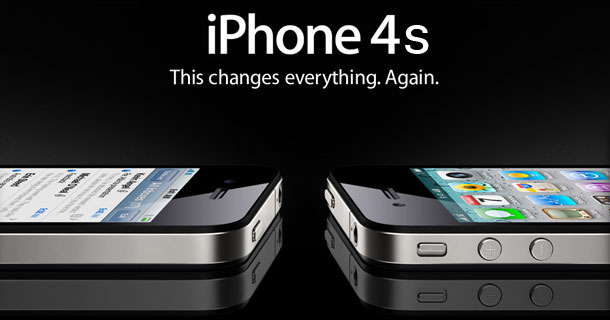
As Apple decided in their infinite wisdom to short-change the iOS faithful when they pushed out their latest smartphone the iPhone 4S those iOS faithful look forward to next year when hopefully Apple will make good on delivering the iPhone 5 and Apple iPad 3, and there is some rumour doing the rounds on both future iDevices.
According to the guys over at Phone Arena by way of Nikkei (translated) the word is Japanese carrier NTT DoCoMo will apparently be releasing the iPhone 5 towards the end of 2012 and the Apple iPad 3 sometime in summer of 2012.
Furthermore apparently both the next generation iOS slate and the iPhone 5 will come out to play sporting LTE functionality something Apple has continually passed on previously due to the roll out of 4G LTE networks.
According to the Nikkie report Tim Cook, Apple’s CEO had a meeting with the president and vice president of NTT DoCoMo, Kiyoyuki Tsujimura and Takashi Yamada during last month to talk about the conditions that would enable the carrier to offer both the Apple iPad 3 and iPhone 5, and word is a deal was agreed including the quantities of the iDevices NTT DoCoMo will order.
Of course Apple isn’t coming forth to confirm any of this, so for now at least it remains firmly in the land of speculation and should be treated as such. However it seem fairly obvious to me that Apple has to deliver the iPhone 5 and iPad 3 in 2012 and both should step up their game with 4G LTE aboard if they are to compete against rivals in the same playing field.


Android 4.0.1(Ice Cream Sandwich) x86 PC-based source code download

The new ICS-x86 PC-based Android 4.0.1 source code is now available to download for PC-based processors; Android users love the fact that this code is open-sourced.

Google have at last made available the new Ice Cream Sandwich x86 source code for developers, this basically means that this operating system can run on many things, especially tablet PCs.
ICS-x86 is still in its early stages, so please remember that this code is not fully stable yet. Redmond Pie points out that it will require more work before it is stable, and that Intel processors as an example offers particular resistance with hardware acceleration and sound, the source also mentions that cameras and Ethernet prove troublesome, let you be the judge of that.
The code is now available to download by visiting the Google Group: Android 4.0.1 is ready; AMD and developers may like this one.

Friday, 2 December 2011

"DingleBerry" tool to jailbreak BlackBerry Playbook

Three developers have reportedly bypassed Research In Motion's security, gaining root access to the BlackBerry Playbook. The trio -- currently known as xpvqs, neuralic and cmw (Chris Wade) -- demonstrated the feat in a few videos this week. In one of the clips, neuralic fiddles with the backlight and LEDs through a command prompt. In another, cmw shows a PlayBook playing a Hulu show (the streaming service blocked RIM's tablet earlier this year).
The hackers will release their discovery next week in the form of a tool amusingly dubbed "DingleBerry," allowing fellow tinkerers to jailbreak their PlayBook. RIM was quick to respond to the claims, vowing to investigate the exploit. "If it is determined that the claim is accurate, RIM will follow its standard response process to develop and release a software update that is designed to minimize adverse impact to our customers or carrier partners," the company said.
watch the video here: http://www.youtube.com/watch?v=VgvFHUClRKA&feature=player_embedded&noredirect=1


The exploit could dent RIM's reputation because the BlackBerry brand prides itself on security. The company has been two steps behind Apple and Google when it comes to consumer smartphones and tablets, so it has attempted to distinguish itself in the enterprise market by harping on BlackBerry's superior security.
For instance, the PlayBook is the only tablet cleared for use by the US federal government after receiving a FIPS certification earlier this year. On the bright side, "DingleBerry" will not affect the company's mobile phones, which run on a different operating system (the PlayBook is powered by a QNX-based OS).

The fact that RIM must uphold its stern appearance on security seems unfortunate in this situation. When a mobile device flops, it's been common for companies to slash prices and encourage community development. Barnes and Noble's Nook is a great example in recent memory, and so is HP's TouchPad to an extent.
The PlayBook has received multiple price cuts and while we don't have sales figures, that doesn't seem to have helped the device's popularity much. The slate is currently fetching $260 to $380 depending on its internal storage

Chrome takesoff Firefox market share for the first time

StatCounter and Net Applications have just released their latest report on global web browser usage and, at least according to the former, Google's three-year-old Chrome browser has already surpassed Firefox in terms of usage. Net Applications still has Firefox ahead by 4 percentage points, but either way the trend is crystal clear and it's just a matter of time before Chrome takes in the second spot behind IE.

StatCounter reports that Chrome took 25.7% of the worldwide market last month, up from just 4.66% two years ago, compared to Firefox’s 25.23 percent. It's a marginal win, but a win nonetheless. Meanwhile, Net Applications says Chrome gained 0.7% in November to 18.2%, while Firefox dropped 0.4 percentage points to 22.1% in the same period. By the latter's estimates, Chrome could outpace Firefox by March 2012.
That's a massive achievement for Google in just a little over three years, even more so considering Opera has tried for years with a very capable alternative but currently holds less than 2% market share worldwide.

Microsoft's Internet Explorer maintains a strong lead with somewhere between 40.63% and 52.63% globally, depending on which source you trust the most. Safari holds a mere 5-6% when it comes to desktop browsers, but dominates the mobile space with 55% usage, according to Net Applications latest figures. Also in mobiles, the Android browser had bumped Opera Mini aside in October for the second-place spot, but in November, Opera Mini took some share back. They now hold 20.1% and 16% of that market, respectively.
Mobile browsers still represent a relatively small portion of the market, but with smartphones and tablets use growing exponentially mobile browsing is also on the rise. According to Net Applications' data for November, browser usage on personal computers represented 92% of the market while mobile devices took 6.7%.

Android 4.0 port for x86 tablets and laptops is released

Google is working with Intel to release a version of Android designed to run on tablets, laptops and other computers with x86 chips. They've made some progress on that front, enabling Android 2.3 to run on embedded systems powered by an Atom E6xx series chip, but it seems the folks over at the Android-x86 project are a step ahead with the first release of Android 4.0.1 Ice Cream Sandwich for x86.
The port is currently optimized for tablets with AMD Brazos chips inside, including the MSI WindPad 110W or Acer Iconia Tab W500. It's still a little rough around the edges: Wi-Fi, touchscreen input and OpenGL ES hardware acceleration with the Brazos’ Radeon GPU are supported, but drivers for wired Ethernet connections, cameras, sound, and hardware-accelerated graphics output on Intel graphics adapters are still missing.

According to developer Chih-Wei Huang, posting in the android-x86 group, AMD is supporting the project by donating devices and offering technical advise from their engineers. Intel on the other hand appears focused on their own port of Android and so far has refused to give the Android-x86 project any support.
The group is therefore currently only offering one Android 4.0.1 ISO image for the AMD Brazos platform. You can grab the 191MB file from the project download page, where you'll also find links for other versions of Android-x86, including a Honeycomb release optimized for Asus tablets and laptops.


Asus Transformer Prime arriving December 19 with positive reviews

Reviews are rolling in for the world's first quad-core tablet, the Asus Transformer Prime, and so far the general consensus appears to be that there's a new king of Android tablets. The device cuts no corner when it comes to hardware specifications. Besides packing Nvidia's hot-off-the-presses Tegra 3 SoC, it also sports a 10.1-inch (1280 x 800) Super IPS+ panel covered in Gorilla Glass, 1GB of RAM and comes in either 32GB or 64GB sizes -- all wrapped in a 8.3mm-thick bushed metal casing that's a hair slimmer than the iPad 2 or Galaxy Tab 10.1.

Other specs include an 8-megapixel shooter on the back and a 1.3-megapixel camera on the front, as well as microHDMI and microSD ports. Like its predecessor, the Transformer Prime connects to an optional keyboard dock ($150) that adds an extra battery, a trackpad, and full-sized SD and USB ports.

Asus' flagship tablet comes preinstalled with Android Honeycomb 3.2.1 instead of the latest and greatest "Ice Cream Sandwich" release, but the company says an update to 4.0 will be out soon. It's also Wi-Fi only for now and there has been no word yet on 3G-equipped versions for the U.S. market.

Besides these relatively minor details and the ocassional stutter when opening menus or switching apps -- which hopefully will be fixed with the ICS update -- reviewers praised the device's aesthetics, long battery life, beautiful display, and graphics prowess. The Verge also says it packs best camera on any tablet.

Available in either Amethyst Gray or Champagne Gold, the 32GB model starts at $499 while the 64GB is going for $599. Pre-orders are open at several retailers, including Best Buy and Newegg. That said, there's still some confusion as to when exactly the device will start shipping, but several reports indicate it will hit online shelves December 12 followed by availability at retail stores on December 19.

Microsoft Office suite for iPad

Microsoft is developing a version of their Office suite for use on Apple’s iPad that could rival Cupertino’s own productivity apps. Applications like Word, Excel and PowerPoint could sell for as low as $10 each, according to sources that spoke with The Daily.
Microsoft already has multiple offerings in Apple’s App Store including Bing, MSN Onit and MSN OnPoint but Office would almost certainly become their highest grossing app to date. It’s no secret that Microsoft is hard at work on developing Windows 8 and tablets to run it, but there’s also no denying that the iPad currently dominates the tablet landscape. With so many iPads in consumer’s hands and even more people using Office, we can only wonder why Microsoft hasn’t released an Office suite for iOS sooner.
Shortly after the iPad was announced in January 2010, Microsoft senior product manager Mike Tedesco said the company was looking at the possibility of bringing Office to the iPad. Yet just a few months later, Microsoft executive Stephen Elop claimed Redmond had no plans to bring Office to the tablet.
In hindsight, both Microsoft and Apple could have benefitted greatly from having the Office suite available at the iPad’s launch. Microsoft would have likely made a boatload of cash and the iPad would have earned more credibility with enterprise users. Instead, Apple developed iPad versions of their iWorks programs to fill the void and we are still waiting on Office from Microsoft.

Twitter Delicious Facebook Digg Stumbleupon Favorites More

 
Design by Free WordPress Themes | Bloggerized by Lasantha - Premium Blogger Themes | Hosted Desktops